
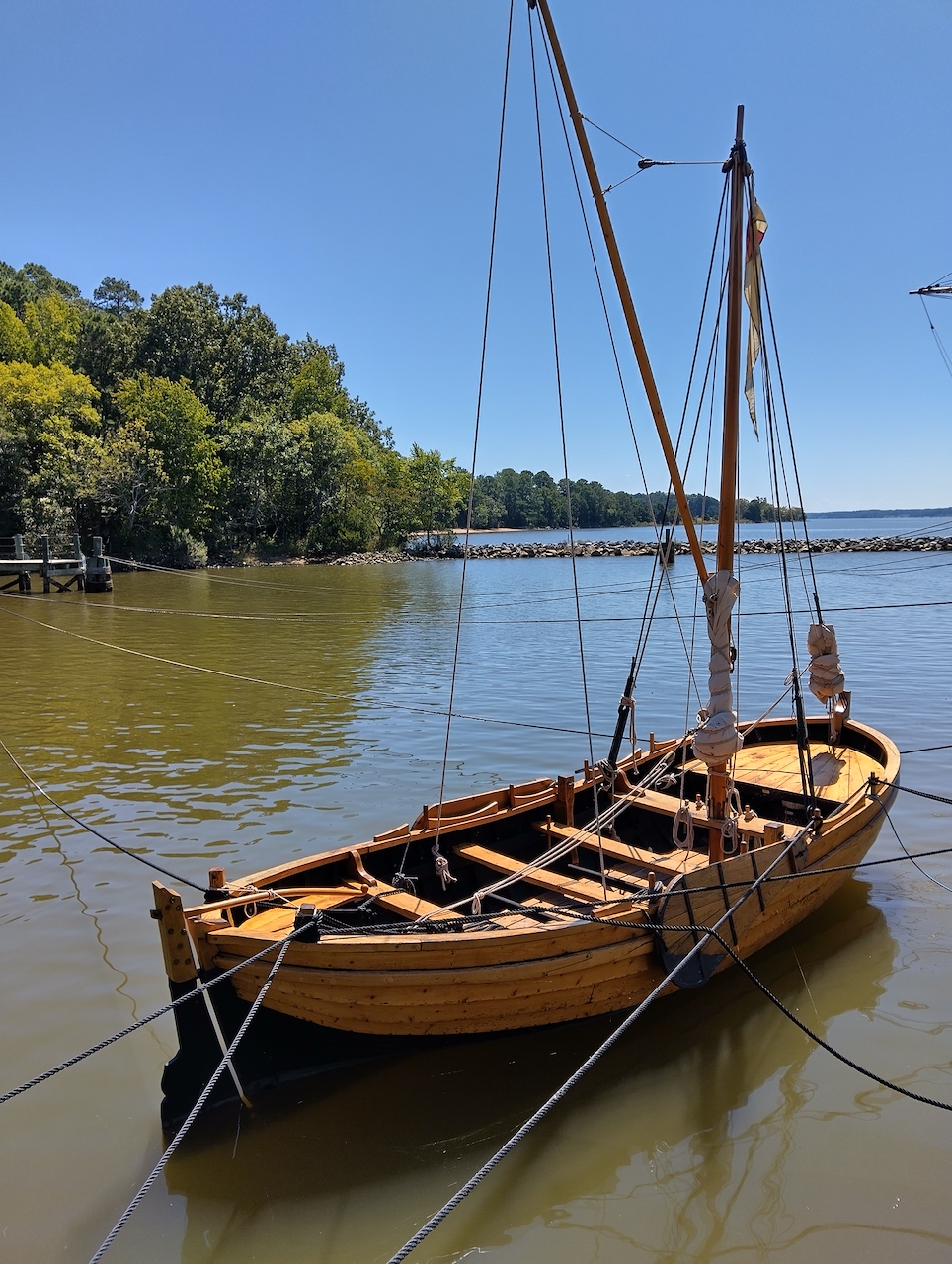
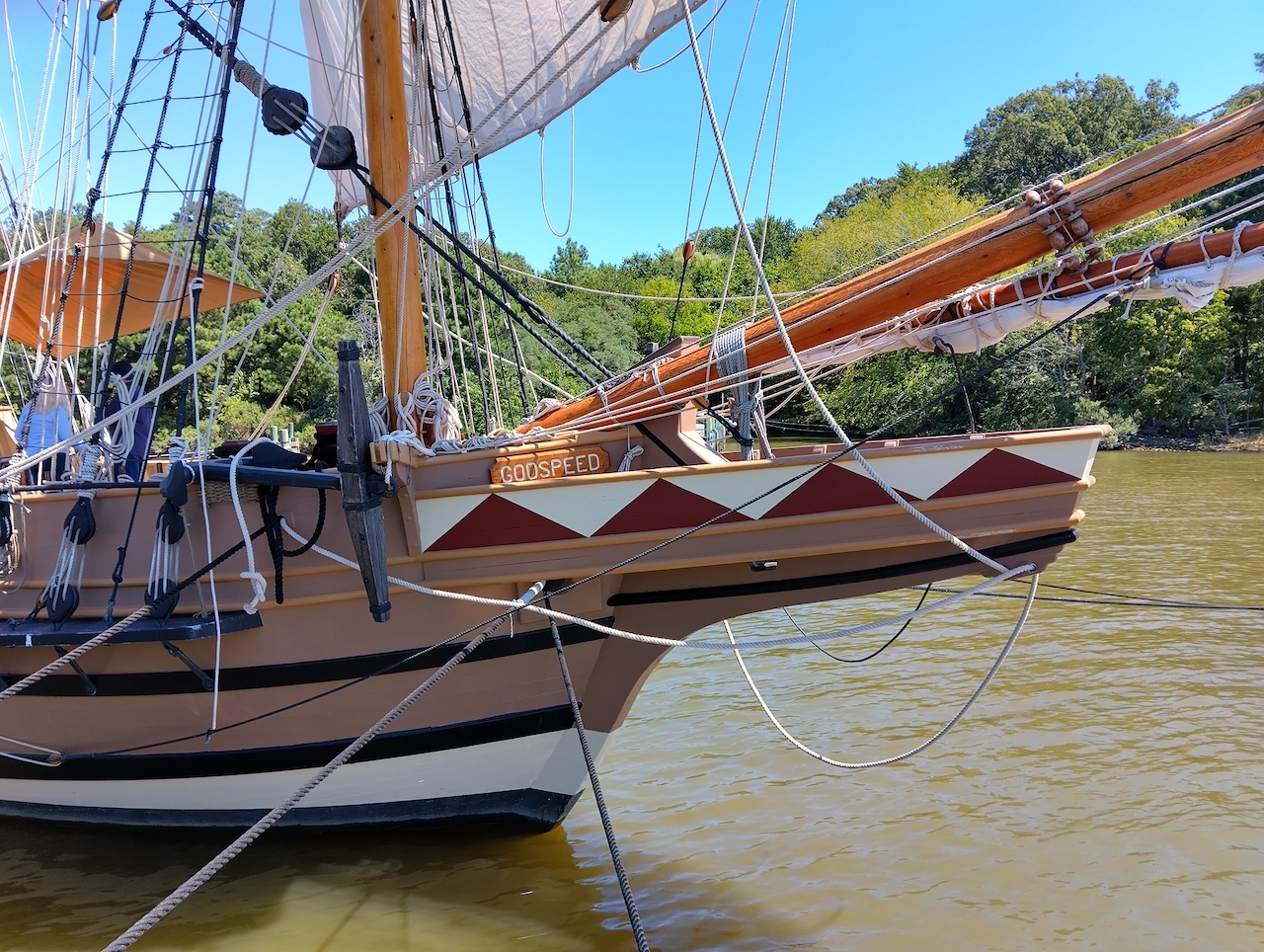
During a memorable trip in August, I explored the captivating Jamestown Settlement located in Virginia. Although the authentic 1607 archaeological location known as Historic Jamestowne lies nearby, this immersive living-history museum stands out with its remarkable recreations, particularly the trio of vessels that transported the initial English colonists: the Susan Constant, Godspeed, and Discovery.
As someone deeply immersed in woodworking, I found myself utterly engrossed by the intricate details of the shipbuilding craftsmanship on exhibit. The enormous masts, the strategic employment of Lignum Vitae—renowned as the wood of life—for the pulley sheaves due to its exceptional self-lubricating qualities and remarkable density, all combined to offer an unparalleled lesson in practical woodcraft. The deliberate choices in timber are evident everywhere: supple woods selected for the masts to withstand bending stresses, decay-resistant varieties for the decking to combat moisture, and robust oak employed for the keel and frame components that form the ship’s skeleton.
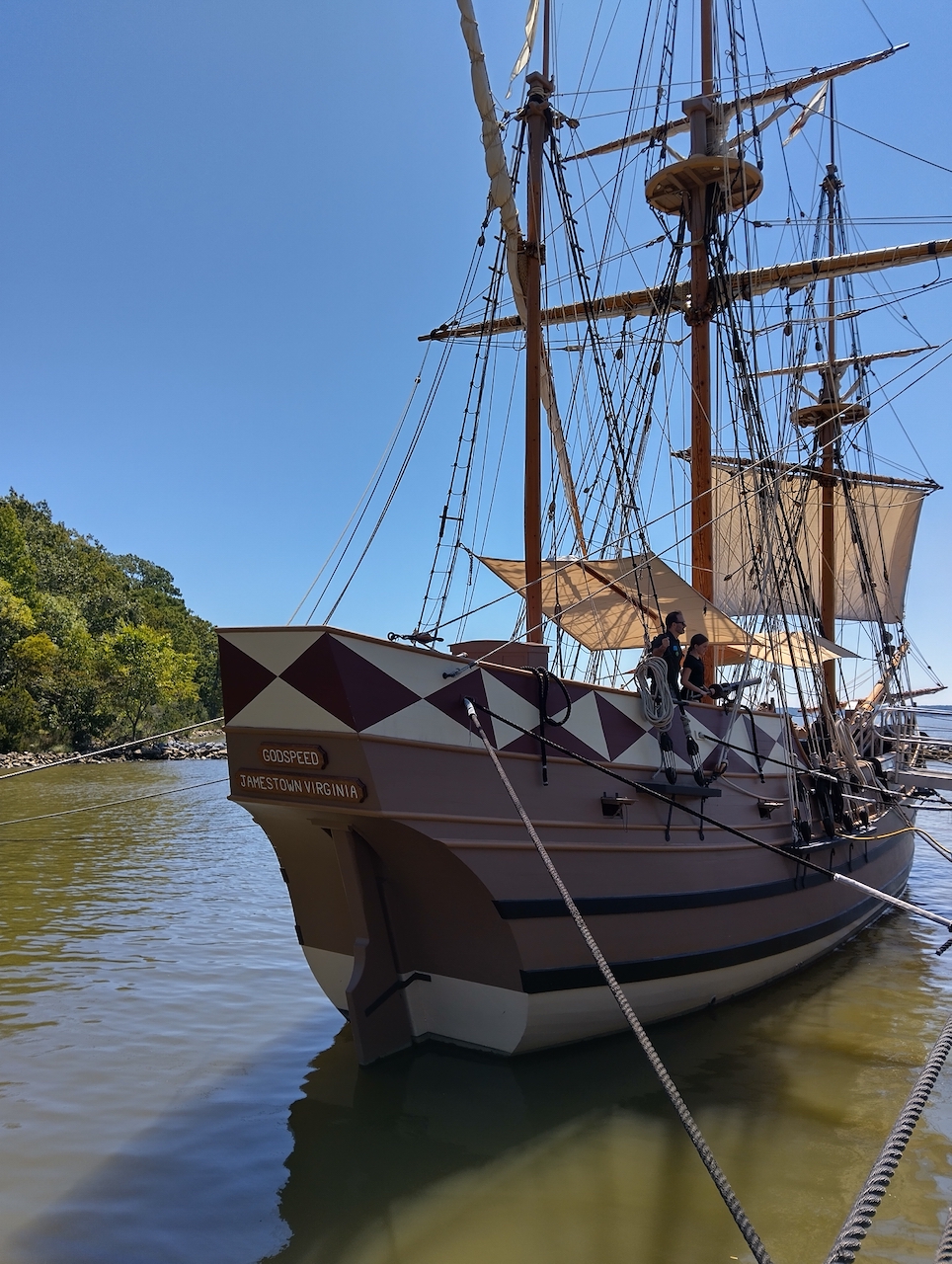
Yet, beyond the grandeur of the ships themselves, what truly held my attention were the striking similarities between the precise instruments employed by navigators to pinpoint a vessel’s location amid the vast oceans and the marking and layout tools that modern woodworkers rely on in their workshops. Ranging from the straightforward cross-staff to the advanced sextant and a variety of dividers, these artifacts trace a direct lineage back to the foundational elements of our woodworking heritage.
The Precursors to the Modern Sextant
Guided by an knowledgeable museum interpreter, I observed live demonstrations of two key instruments that paved the way for today’s sextant. These devices were essential for gauging the elevation of celestial bodies like the sun or stars, thereby calculating the ship’s latitude with accuracy.
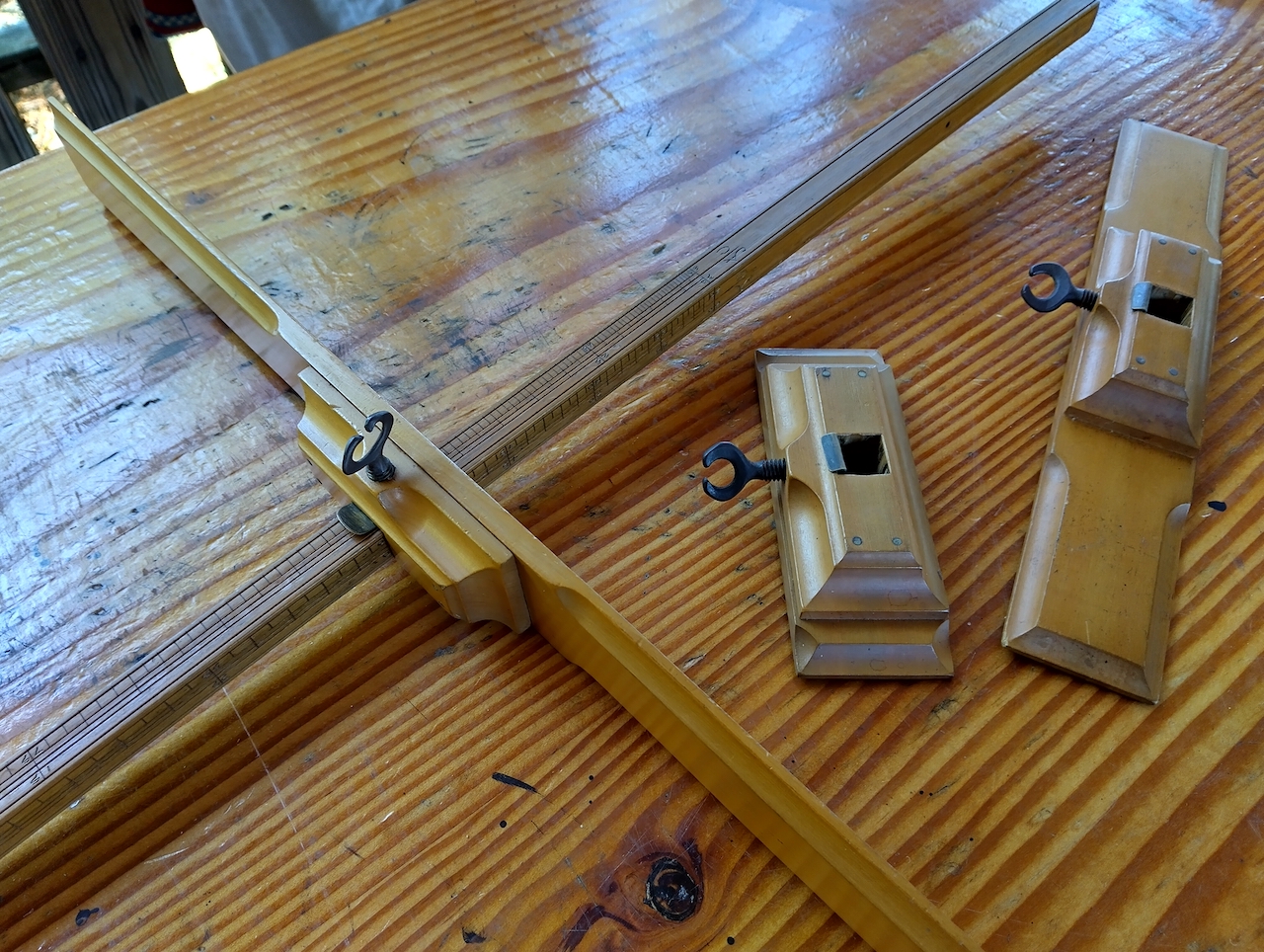
1. The Cross-Staff: A Scaled-Up Marking Gauge
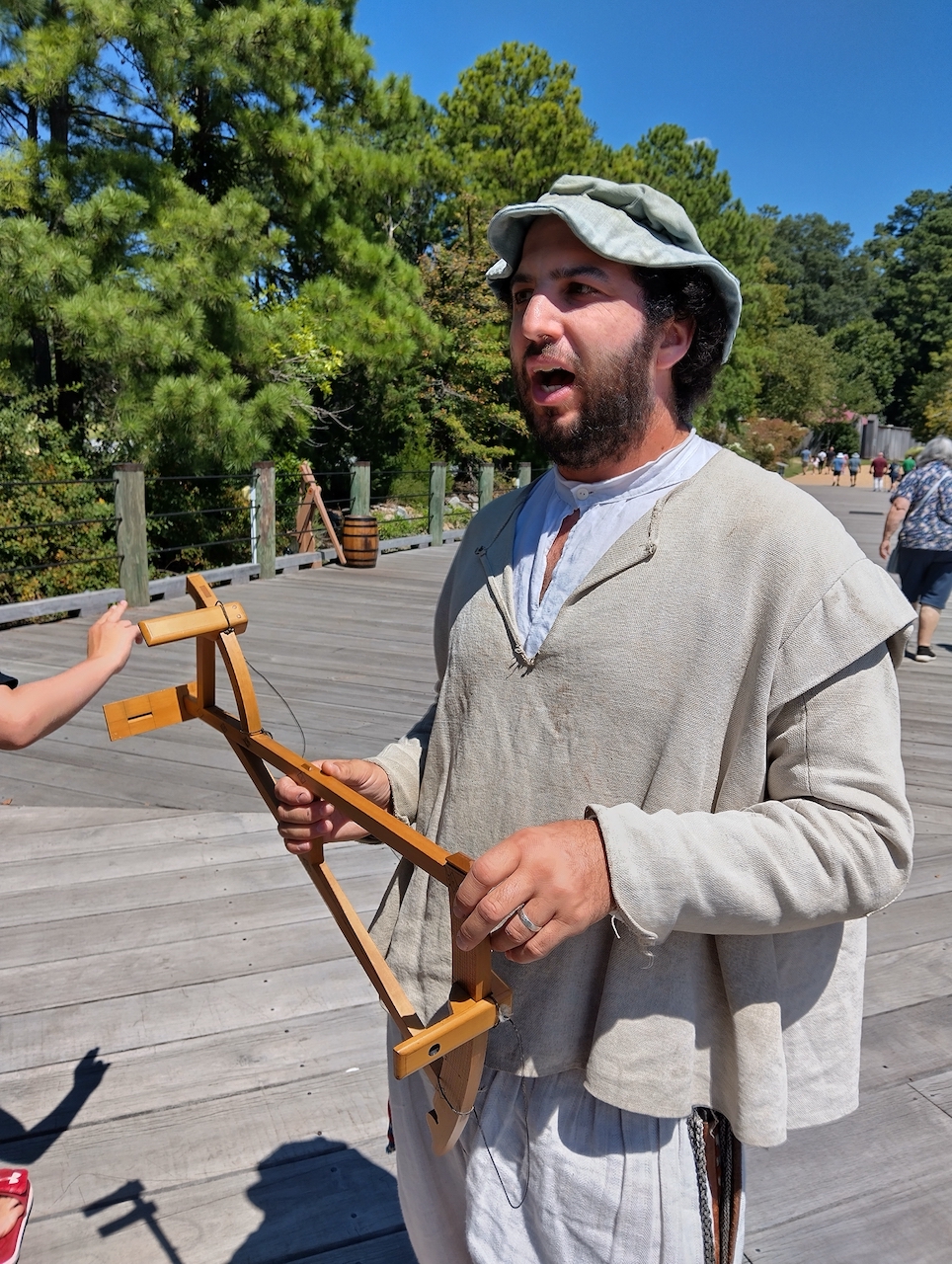
The initial instrument introduced was the cross-staff, the most rudimentary and ancient of its kind. For anyone familiar with woodworking, the visual parallel is instantly recognizable—it mirrors an oversized marking gauge in both form and function.
- Woodworking Construction: The tool comprises a primary staff with a square cross-section, serving as the main beam, paired with a transversely sliding component termed the transom, which acts akin to a fence. Artisans typically crafted these from pearwood or boxwood, prized for their dimensional stability and resistance to warping.
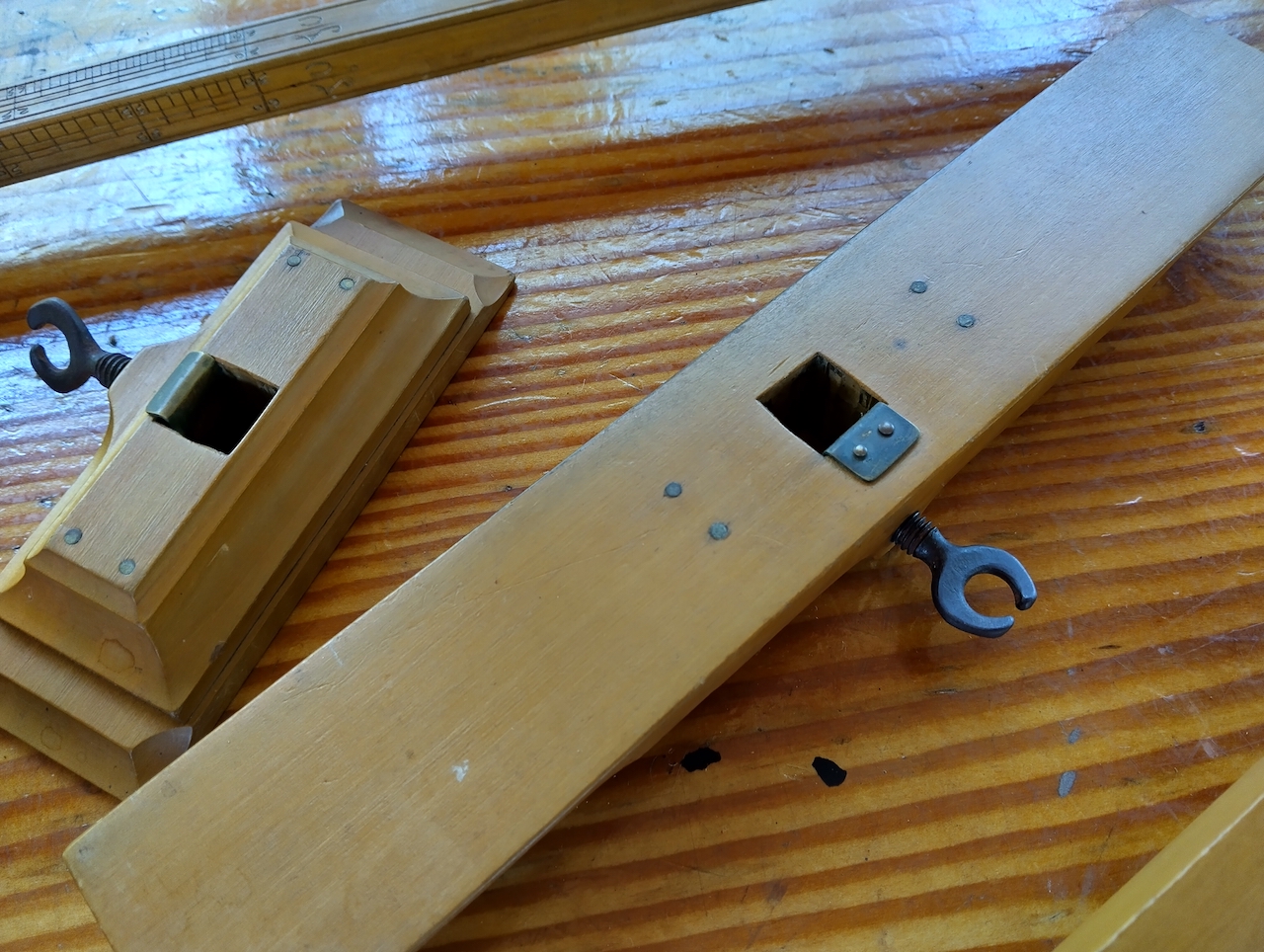
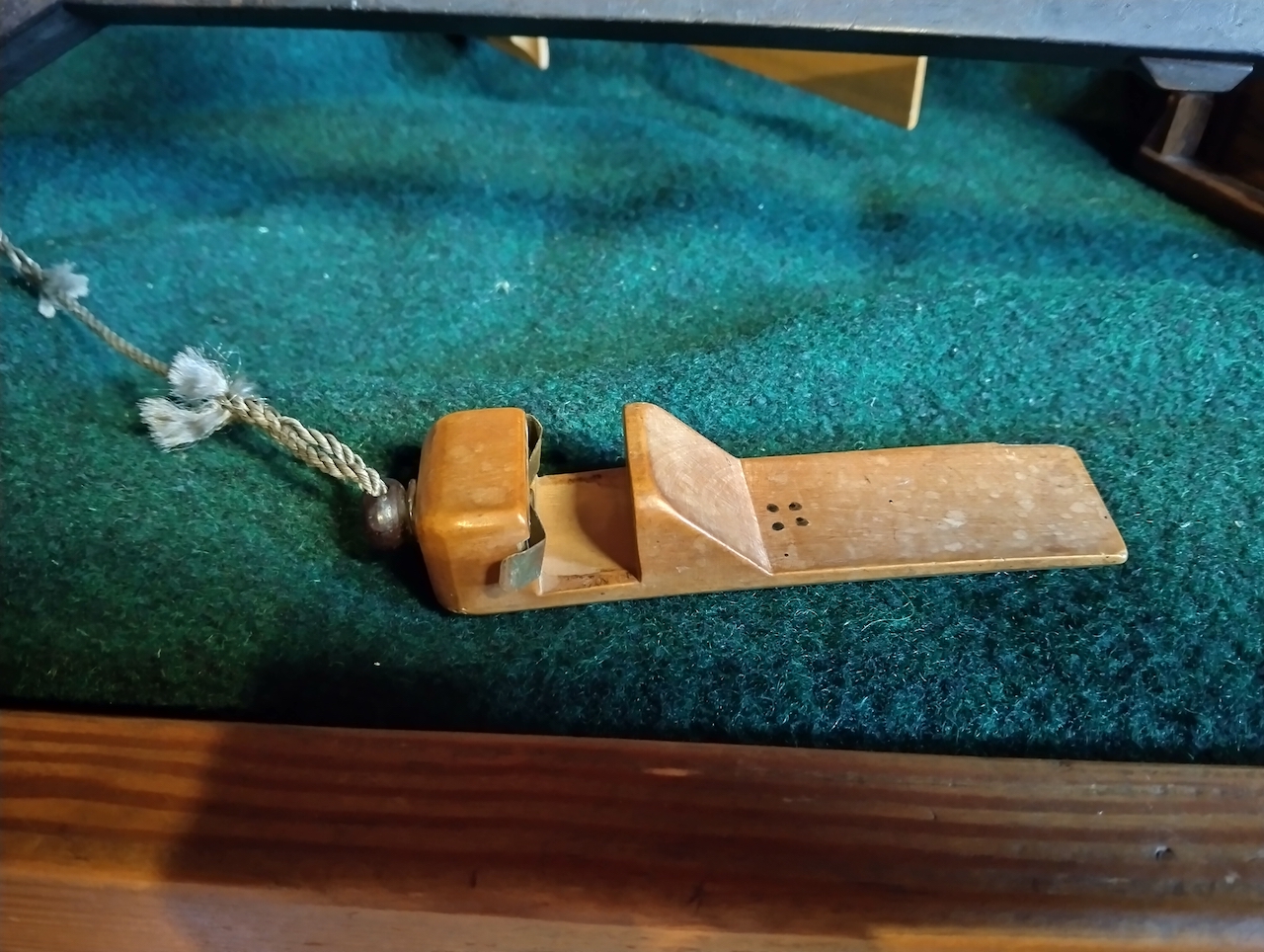
- Friction Locking Mechanism: Here lies the most intriguing similarity to contemporary shop tools. The transom secures its position via a friction lock system. A standout feature caught my eye: a meticulously forged iron screw that presses against an internal metal plate within the tool’s head. This plate evenly applies force to the wooden staff, securing it firmly without causing surface damage, reminiscent of the sophisticated brass locking plates integrated into high-quality woodworking gauges.
- Operational Technique: In practice, the navigator positions one end of the staff against their eye while adjusting the transom’s position until its lower edge coincides with the horizon and the upper edge precisely aligns with the sun’s position.
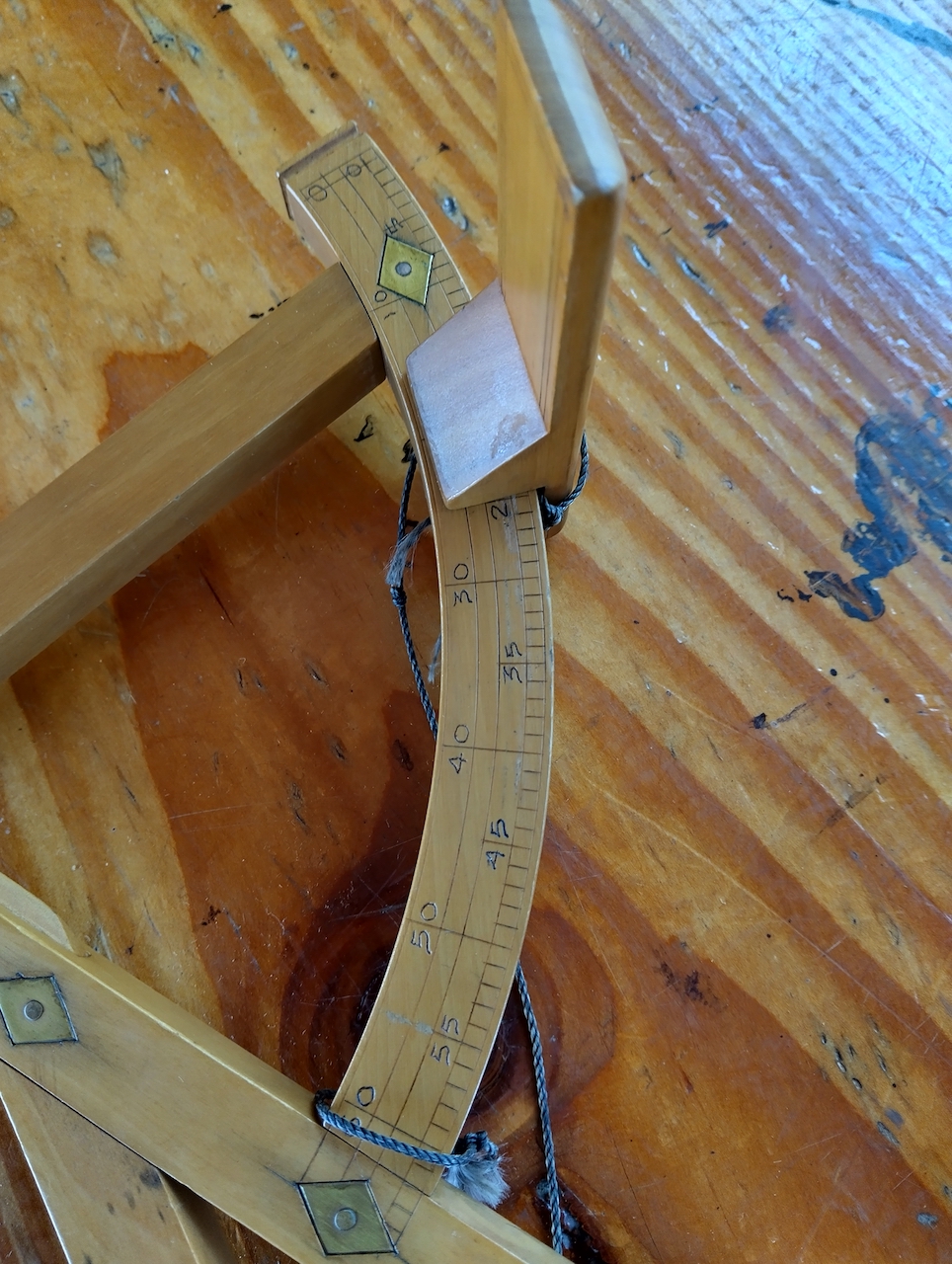
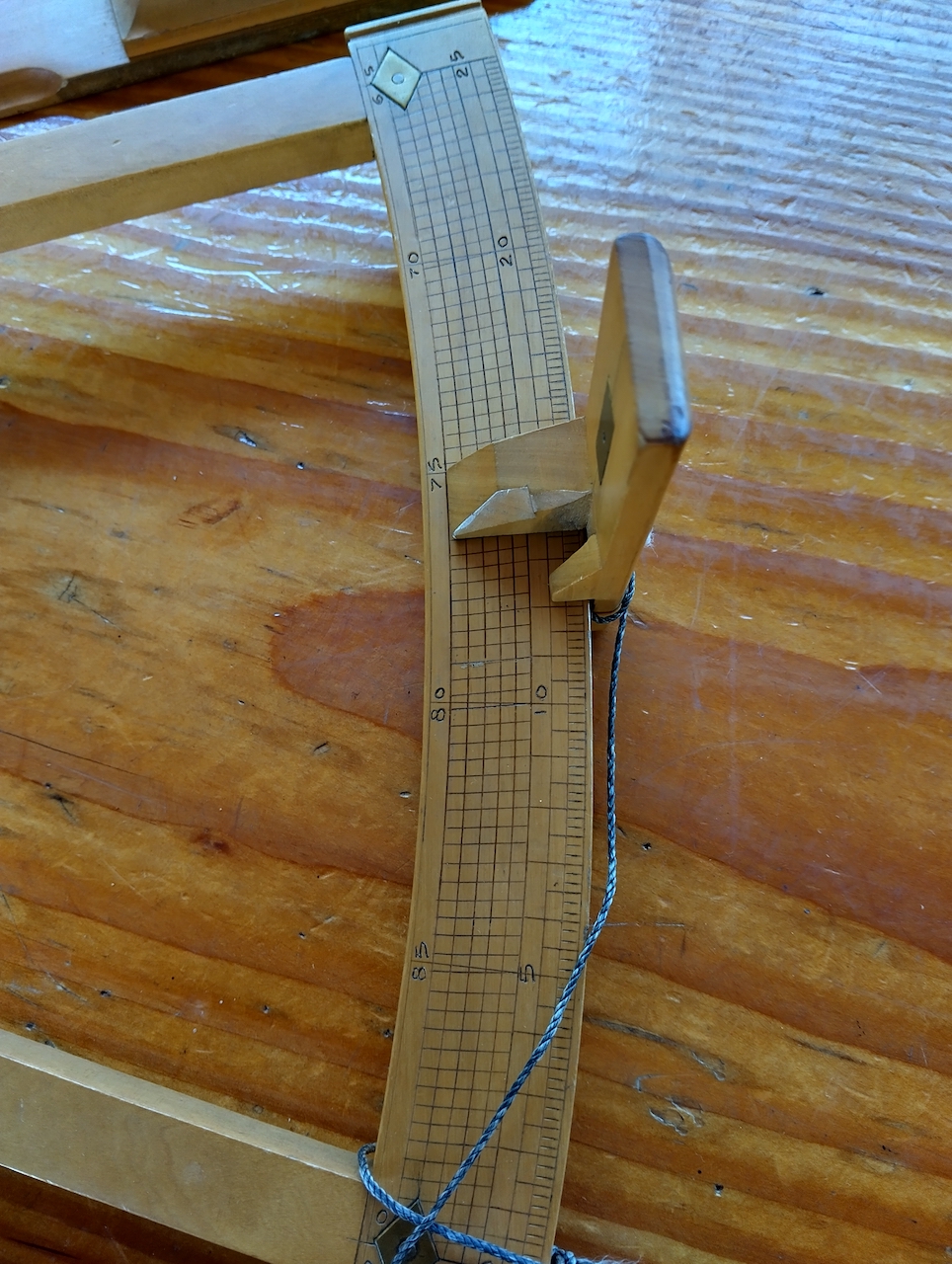
- Graduated Scale: Along the staff’s length, finely calibrated degree markings are etched or incised directly into the wood surface with extraordinary accuracy, ensuring reliable readings even after prolonged use at sea.
2. The Backstaff (Davis Quadrant)
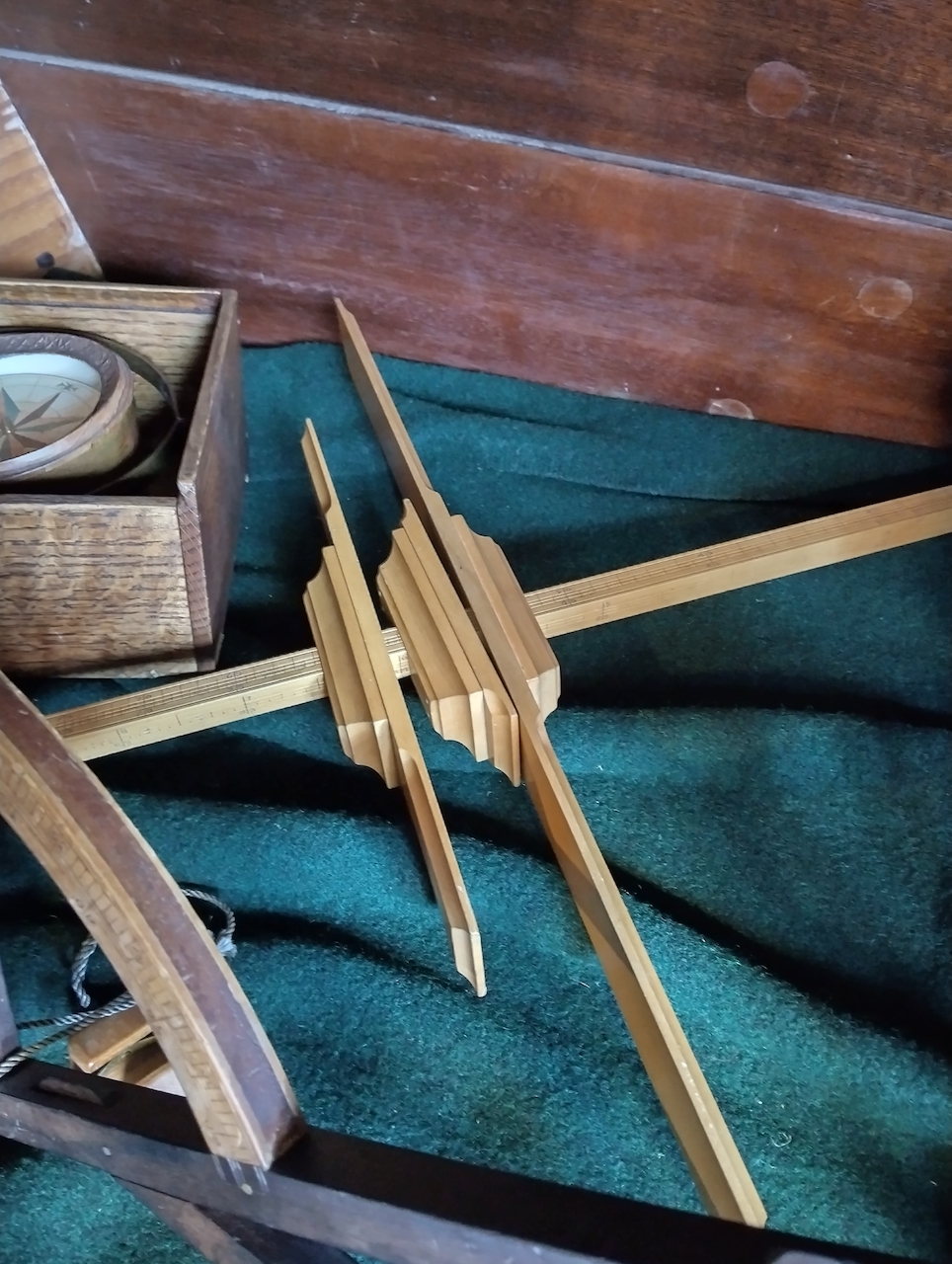
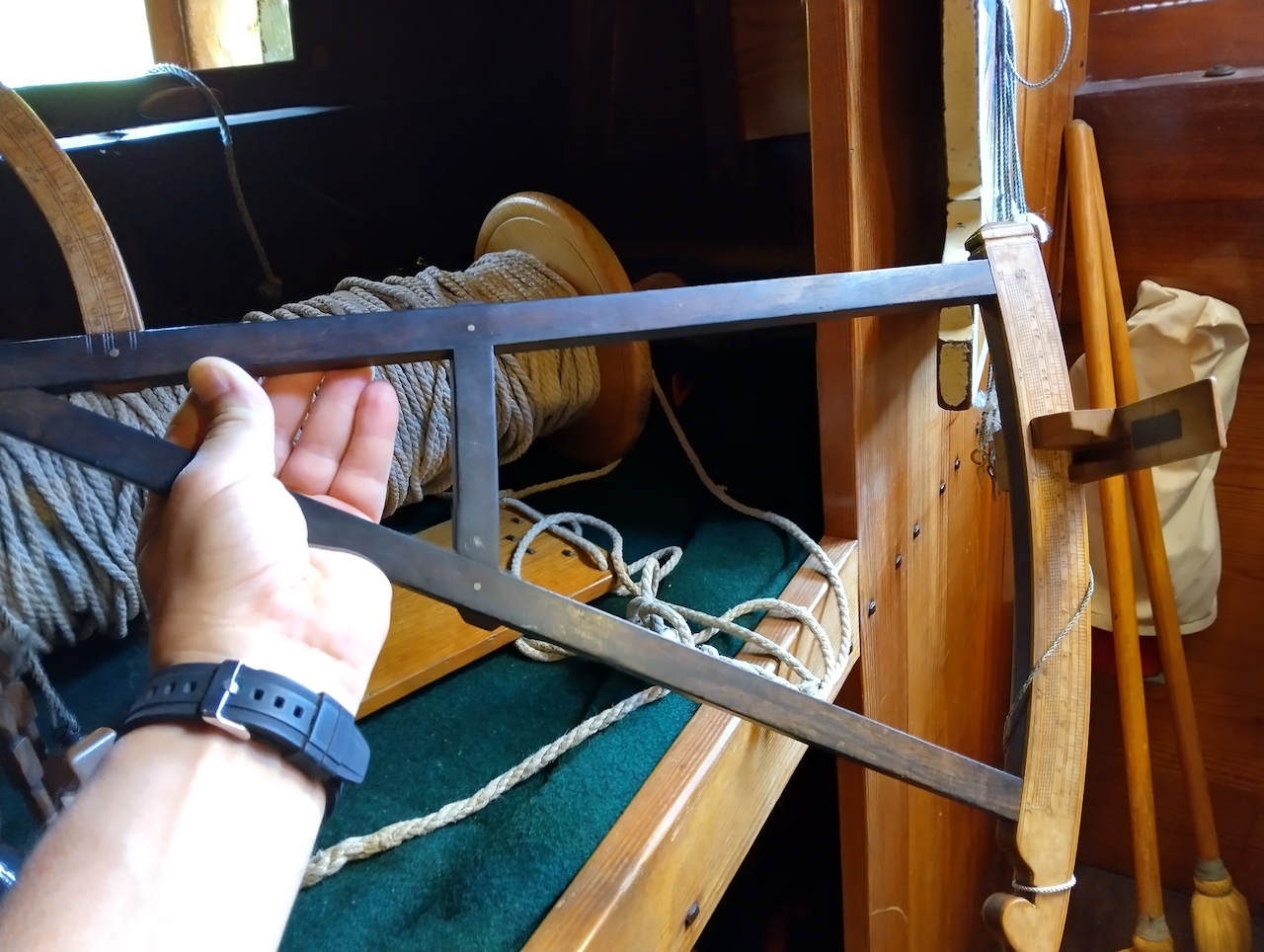
The subsequent tool, considerably more advanced, is the backstaff. Despite its intricate design, it represents a crucial evolutionary step from the basic cross-staff toward the sleek metal sextants familiar in modern navigation.
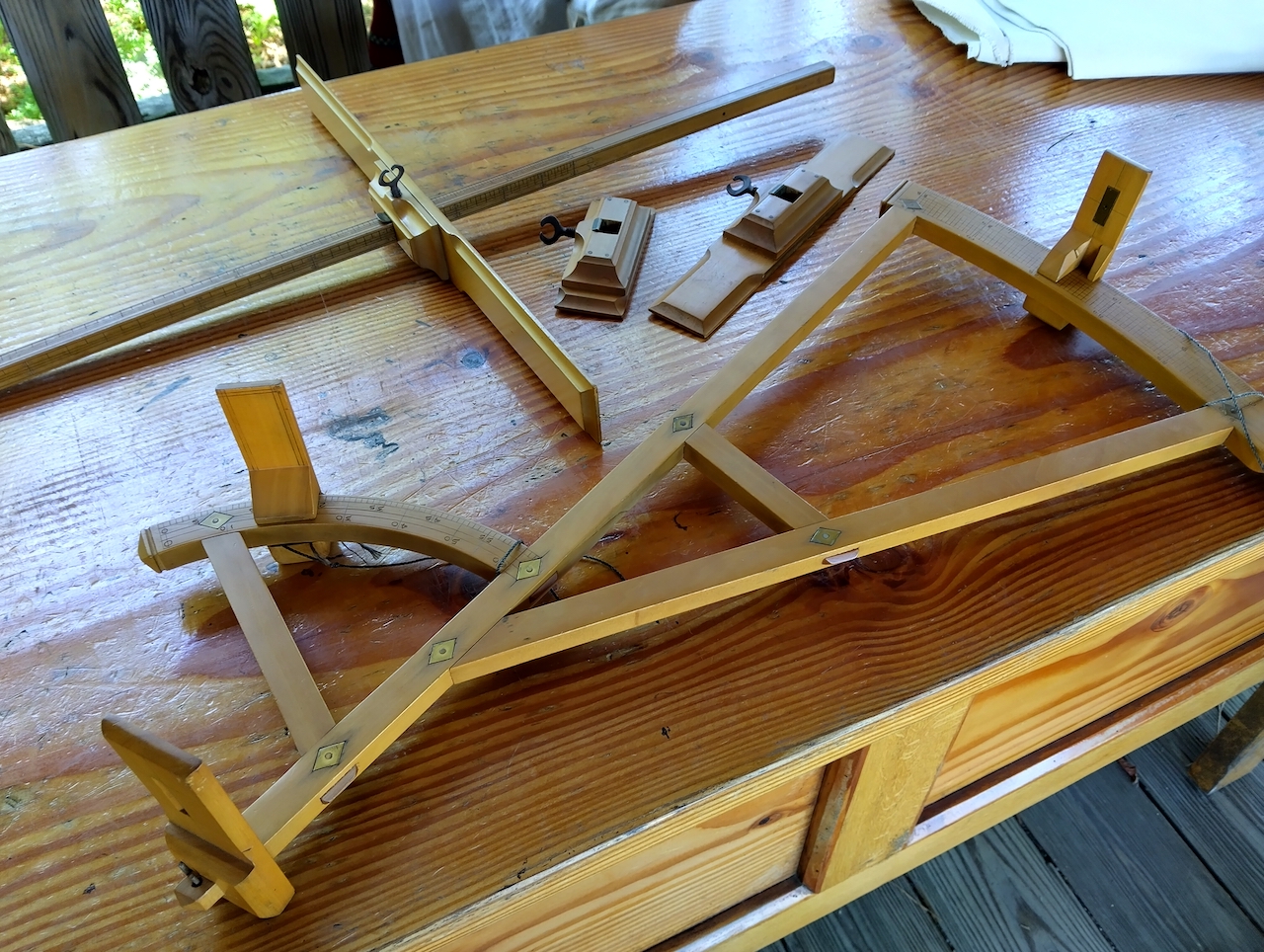
- Key Advantage: In contrast to the cross-staff, which required staring directly into the sun, the backstaff allows the user to face away from the light source, utilizing shadow alignments instead. This innovation significantly reduced eye strain for sailors enduring extended journeys across open waters.
- Structural Details: The device incorporates several curved arches and adjustable vanes that facilitate highly refined measurements. The woodworking techniques shine through in the elegant joinery, featuring graceful curves, flawless sliding mechanisms, and impeccable fits that withstand the rigors of maritime conditions.
Exceptional Joinery and Decorative Elements
Among the many highlights, the joinery stood out as particularly impressive. Far from crude approximations, these were paragons of precision woodworking suited for scientific instruments. Key observations included:
- Mortise and Tenon Connections: These robust joints unite the various frames and arches, preventing any distortion or misalignment that could compromise accuracy amid the damp, saline atmosphere aboard a sailing vessel.
- Artistic Flourishes: The recreated tools, faithfully modeled after historical originals, bear intricate scrolls and carved motifs that underscore the reverence for these instruments. For navigators, such tools ranked among their most treasured belongings, often personalized with elaborate designs.
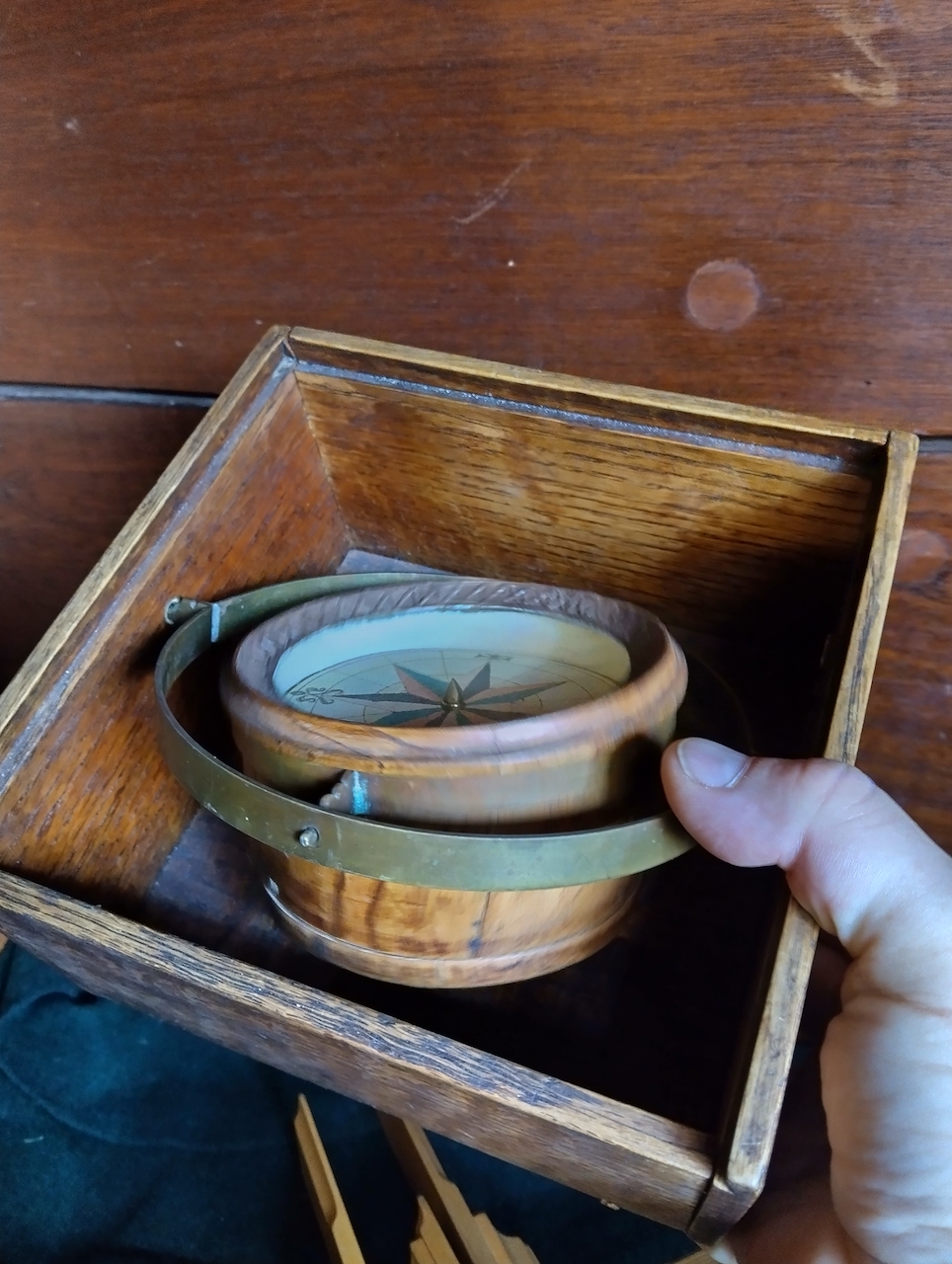
The Compass Box with Gimbal Suspension
Additionally, I captured an image of a compass enclosure, a stunning wooden case encasing a metallic gimbal mechanism. This ingenious pivot arrangement keeps the compass card level regardless of the ship’s violent motions in stormy seas. Aside from the gimbal rings and magnetic needle, the housing exemplifies advanced techniques in compact box making, with tight joints and smooth interior surfaces.
A Must-Visit for Woodworking and History Enthusiasts
For travelers in the Virginia region, the Jamestown Settlement offers an enriching experience. Encountering these wooden marvels serves as a profound reminder that the tools enabling worldwide discovery were crafted from timber, secured by masterful joinery, and calibrated with hand-scribed graduations. It celebrates the enduring legacy of woodworking and illustrates how innovations like a basic friction clamp contributed to charting unknown territories and reshaping history.